
Clinical Comparison: Complementary Feeding Strategies
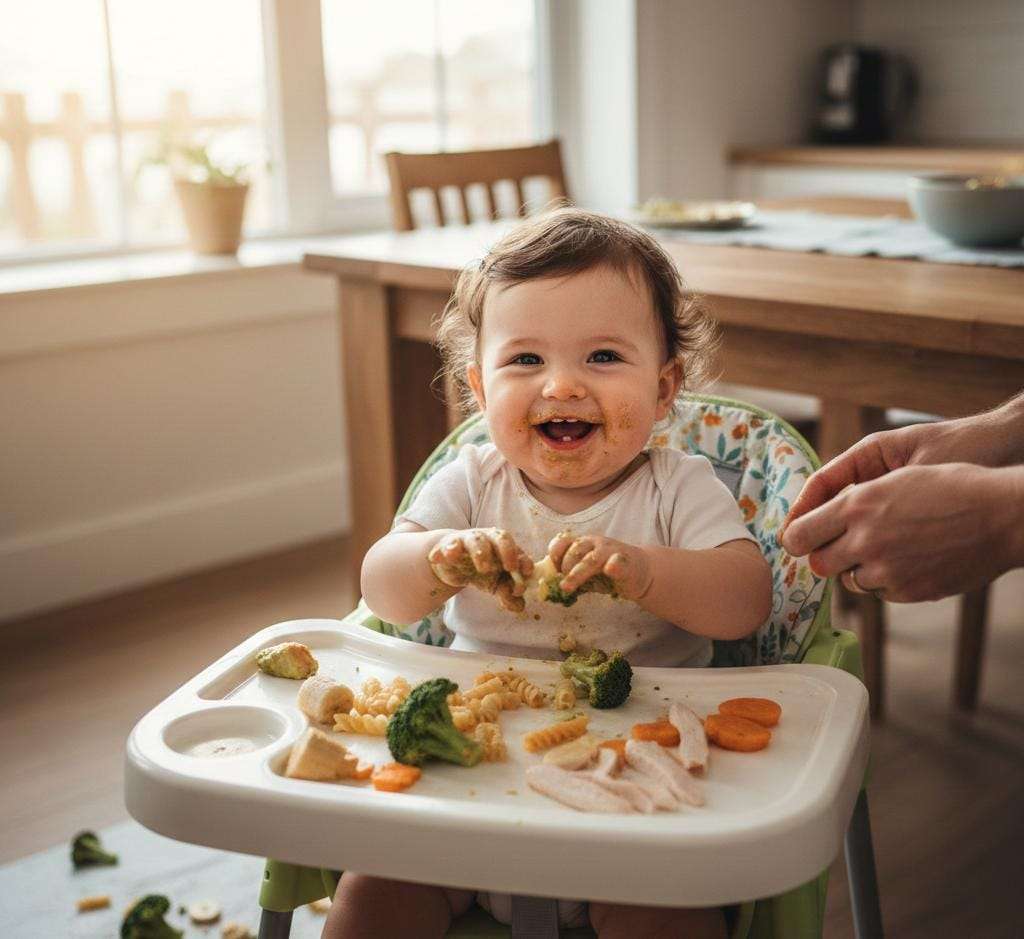
An Analysis of Baby-Led Weaning (BLW) versus Traditional Spoon-Feeding (TSF)
The transition from an exclusive liquid diet of breast milk or formula to solid foods—known clinically as complementary feeding—represents a foundational milestone in pediatric development. In modern nutritional discourse, two primary philosophies prevail: Traditional Spoon-Feeding (TSF) and Baby-Led Weaning (BLW). While both methodologies share the ultimate goal of meeting an infant’s escalating nutritional demands, they diverge significantly regarding motor skill acquisition, the development of internal satiety cues, and the introduction of complex textures. This overview evaluates these strategies to assist healthcare providers and caregivers in making informed, evidence-based decisions.
1. Methodological Frameworks

Traditional Spoon-Feeding (TSF)
The conventional approach is a caregiver-directed process. It focuses on a “bottom-up” textural progression designed to mitigate the risk of gagging while ensuring a consistent volume of nutrient intake. This method typically follows a structured three-tier evolution:
Initial Phase: Smooth, thin purees consisting of single-ingredient foods (e.g., iron-fortified rice cereal or pureed fruits).
Transitional Phase: Thicker, mashed consistencies containing soft, manageable lumps.
Advanced Phase: The introduction of soft chunks and finger foods, usually occurring between 8 and 10 months as the infant’s pincer grasp matures.
Baby-Led Weaning (BLW)
In contrast, BLW is an infant-led, “top-down” approach that skips the pureed stage entirely. Starting at the onset of solids, the infant is provided with soft-cooked, appropriately sized portions of the same foods the rest of the family consumes. In this model, the infant is the primary agent of the feeding process, exercising autonomy over:
Selection: Choosing specific items from a nutrient-dense variety.
Self-Feeding: Using manual dexterity to grasp and transport food to the oral cavity.
Satiety Regulation: Controlling the tempo of the meal and signaling the cessation of hunger based on internal cues.
2. Physiological Readiness and Developmental Timing
Regardless of the chosen technique, global health organizations like the World Health Organization (WHO) and the American Academy of Pediatrics (AAP) advocate for the introduction of solids at approximately 6 months of age. At this juncture, an infant’s renal and digestive systems are sufficiently robust to metabolize complex nutrients.
Clinical Indicators of Readiness:
Postural Stability: The ability to sit upright in a high chair with minimal assistance, which is vital for safe deglutition (swallowing).
Cervical Control: Sufficient head stability to prevent airway obstruction.
Regression of Tongue-Thrust Reflex: The cessation of the automatic physiological response that ejects solid objects from the mouth.
Visual-Motor Integration: The coordination required to identify food and accurately guide it to the mouth.
3. Comparative Analysis: Benefits and Implementation Challenges
Core Advantage : Enhances self-regulation and dexterity. Allows precise monitoring of caloric intake.
Texture Integration : Rapid exposure to variety; limits pickiness. Controlled, gradual transition for cautious parents.
Logistics : Baby shares modified family meals. Requires separate preparation/pureeing of food.
Environmental Impact : High mess; encourages sensory exploration. Low mess; caregiver maintains control.
Risk Factors : Potential for choking if guidelines are ignored.
4. Nutritional Sufficiency and Growth Trajectories
Addressing the Iron Gap
At the 6-month mark, an infant’s prenatal iron stores begin to diminish, making dietary iron essential for neurological development.
In TSF: Fortified cereals and pureed meats offer a highly predictable and bioavailable source of iron.
In BLW: Caregivers must be diligent. Since early self-feeding often involves more exploration than ingestion, it is critical to offer iron-rich finger foods—such as tender strips of beef, liver spreads on toast, or smashed legumes—at every meal to prevent deficiency.
Energy Density and Growth
Clinicians often worry that BLW infants might fail to meet caloric requirements. However, the BLISS study demonstrated that BLW infants typically achieve growth patterns similar to those of spoon-fed infants. The distinction lies in the macronutrient profile; BLW infants often consume higher levels of proteins and healthy fats from whole foods, whereas TSF infants may receive more carbohydrates from fruit and vegetable purees.
5. Safety: Differentiating the Gag Reflex from Choking
The primary deterrent for many parents considering BLW is the fear of asphyxiation. Effective counseling requires distinguishing between these two physiological events:
Gagging (Physiological Safeguard):
A normal reflex where the baby moves food away from the airway. Symptoms include coughing, retching, or a reddened face. It is an essential part of learning oral-motor mechanics.
Choking (Medical Emergency):
A true airway blockage. The infant will be silent, unable to breathe or cough effectively, and may exhibit cyanosis (turning blue). This necessitates immediate life-saving maneuvers.
Safety Standards for Solids:
Dimensions: Food should be cut into “spears” or “batons” (the length of an adult finger) to allow the infant to grasp the base while gnawing the top.
Consistency: Items must be soft enough to be compressed between the tongue and the palate (e.g., steamed squash, avocado, or ripe banana).
High-Risk Exclusions: Whole grapes, popcorn, raw carrots, and whole nuts must be avoided to prevent obstruction.
6. Long-Term Developmental and Behavioral Outcomes
Obesity Prevention and Satiety Sensitivity
BLW is hypothesized to protect against childhood obesity by fostering self-regulation. When infants control their intake, they reinforce their ability to recognize “fullness.” Conversely, TSF may encourage “over-feeding” if a caregiver pressures the child to finish a pre-portioned jar, potentially overriding the child’s natural satiety signals.
Sensory Processing
BLW provides an immersive sensory environment. Interaction with various temperatures, textures, and aromas facilitates proprioception and the refinement of the pincer grasp. This early sensory engagement is frequently associated with a more diverse palate and reduced food neophobia (picky eating) in later childhood.
7. The Integrated "Responsive" Approach
Modern pediatric guidance often promotes a Responsive Feeding model—a hybrid of both philosophies. This approach prioritizes the infant’s cues while ensuring nutritional density. Strategies include:
Offering “pre-loaded” spoons of purees or yogurt for the baby to hold.
Providing finger foods for exploration while offering spoon-fed purees to supplement intake.
Maintaining a “trust the infant” mindset: if the child shows disinterest or turns away, the meal concludes regardless of the volume consumed.
8. Summary of Clinical Best Practices
To optimize the transition to solids, the following recommendations are advised:
Proactive Allergen Introduction: Regardless of the method, introduce common allergens (peanut, egg, dairy) around 6 months to minimize allergy risk.
Constant Vigilance: An adult must provide undivided attention during every meal.
Orthopedic Alignment: The infant should be seated at a 90-degree angle; reclined positions significantly increase the risk of aspiration.
Oral-Motor Training: Offer water in open or straw cups to build the muscles required for mature drinking patterns.
Conclusion
Neither Baby-Led Weaning nor Traditional Spoon-Feeding is inherently superior; rather, the “best” method is the one that aligns with an infant’s developmental stage and a family’s lifestyle. While TSF provides a structured and measurable start, BLW encourages autonomy and sensory growth. Ultimately, successful feeding is responsive feeding—an approach that ensures the child is safe, nourished, and supported in building a lifelong, positive relationship with food.